Belik, V.P. (2009) Birds of planted forests of the steppe Ciscaucasia

March 16th, 2010 Posted in New publications | No Comments »

Belik, V.P. 2009. Birds of planted forests of the steppe CiscaucasiaIn 2009 in Kryvyi Rih (Ukraine) a new book has been published:

Belik, V.P. 2009. Birds of planted forests of the steppe Ciscaucasia: Composition and formation of ornithofauna in arid conditions. – Kryvyi Rih: Mineral. 215 p.

This book represents a text of the dissertation defended in 1986 at Institute of Zoology of Ukrainian Academy of Sciences in Kyiv. Despite a slight declining interest in this subject in the 1980s – after the release of a large series of publications of the Ukrainian and Russian zoologists, dedicated to the study of ornithofauna of steppe planted forests – these studies are still valid until now.

It’s the point that precisely at that period the USSR had accumulated extensive data on faunogenesis of birds, which were repeatedly discussed in the press, but, apparently, not comprehended to an end. Only recently, when it was prepared the information ground, “ploughed” by current global dynamics of the bird ranges, there arose prerequisites for a deeper analysis of the collected data of that period. And a brief overview of the problem, undertaken again in 2003 (Ornithologia (Ornithology), Issue 30, pp. 25-31), has found a very favorable response among specialists. Therefore, it would be useful once again to discuss these issues on particular materials, which are contained in the dissertation.

Read the rest of this entry »

The practice of installing protection against martens for nesting trees of birds of prey

March 10th, 2010 Posted in Misc, Photos | 1 Comment »

In field practice, we repeatedly had to deal with cases of predation by martens in the nests of certain species of birds of prey. In some cases, not only clutches were destroyed and chicks were killed, but also adult birds such as the Common Buzzard. Most frequently these are small birds of prey which are subjected to predation press by mustelids (small falcons, the Sparrowhawk, Long-eared Owl). It is especially unpleasant when martens ruin nests of rare species of birds of prey.

Photo by S.Domashevsky, R.Vatrasevich

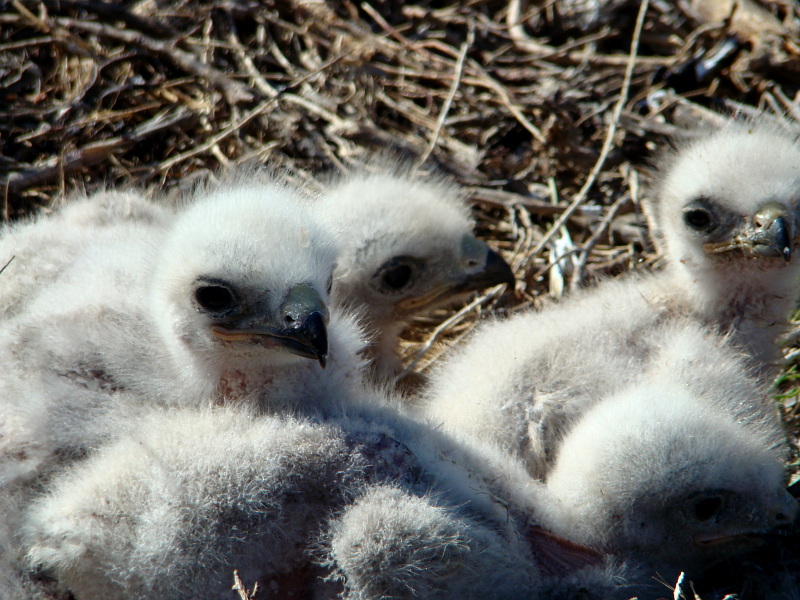
In our practice there was a case where the marten killed on the nest a large chick of the Short-toed Eagle in the age of 6-7 weeks. Therefore, in Chernihiv region in the Regional Landscape Park “Mezhrechenskii” there have been taken measures to protect two trees for one nesting pair of the Short-toed Eagles from attacks of the marten. It is the pair of raptors which lost their chick in 2008. In addition, during regular felling in breeding territory, the certain kind of nesting trees should be specially protected from terrestrial predators: the nesting trees which are easily accessible but selected by the Short-toed Eagle in the areas unsuitable for cutting forest. In this way we increase the probability of the annual use of these trees by birds, thereby reducing human disturbance on reproductive success.
Installing protection against terrestrial predators is also justified in cases of special studies related to the need to visit occupied nests of birds of prey (Galushin, Kostin 2008).

Read the rest of this entry »

Counts of wintering birds of prey in the Crimea in 2010

February 27th, 2010 Posted in Field researches, Photos, Video, Wintering | No Comments »

From 25 January to 1st February founders of UBPRC took part in the Bustard census organized by the Azov-Black Sea Ornithological Station (http://ornitology.narod.ru) in zonal landscapes of South Ukraine. At the same time the data were collected on distribution and numbers of birds of prey.

Our team has covered with counts the following regions of the Crimea: Dzhankoy, Krasnohvardiiske, Nyzhn’ohirskyi, Bilohirsk and Simferopol. A car ‘Niva’ was used for investigations. A total length of transects equaled to 1300 km.
Weather conditions during fieldwork were not quite typical for the Crimea. According to information of local people, there was almost no frost in the steppe Crimea until the second decade of January. However several days before the counts the weather had dramatically changed: a cyclone caused rains, temperature decrease resulted in strong frosting-up, and after that snow fell. It was unusual to see this picture of the traditionally warm Crimea: ice-coated trees glimmering in the sun, ice-covered road as plain as glass, all dumped with snow… In some places in open terrain the snowdrifts reach more than 0.5 m, being a considerable obstacle to move outside the highways. Sometimes even on highways there were piles of snow hardly getting over by motor-cars. Night temperature amounted to -20oC! Only in last days of counts the warming came, small rain fell, and snow began quickly melting.

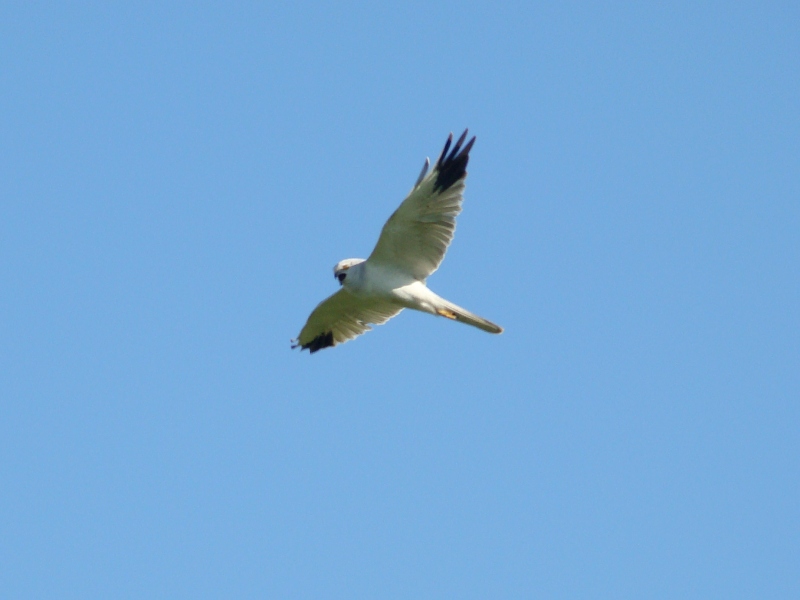
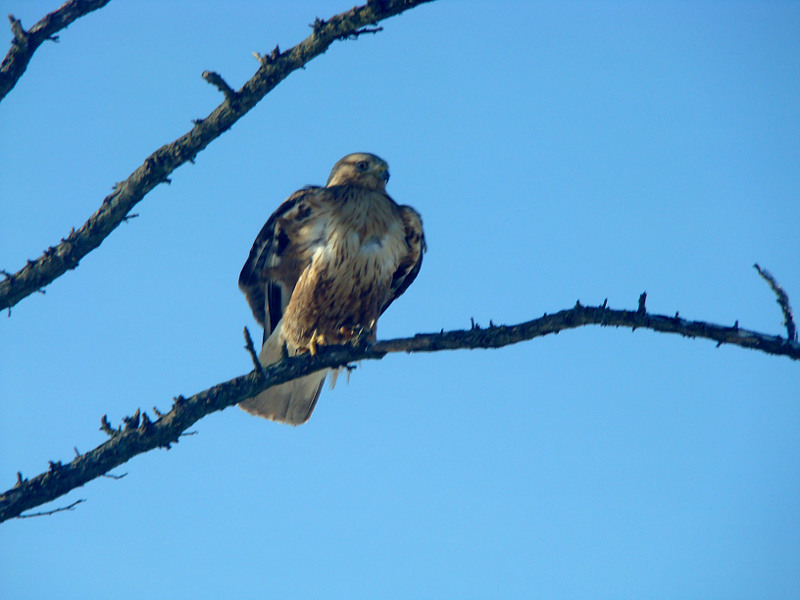
Main habitats in the region of our investigations consisted of agricultural landscapes separated by forest belts and irrigation canals, part of the area was occupied by vineyards and settlements. The areas of steppe sites were small. Since the count routes were long, we observed quite a high number of birds of prey. However, they distributed unevenly: sometimes there wasn’t any raptor for many km of ploughed fields. But fallows, field with unploughed stubble and also steppe sites held concentrations of raptors – sometimes up to 15 individuals of different species were visible from one point of observation. At this, distribution of species was also unequal: in different days different species dominated. A total of more than 700 individuals of 13 species of Falconiformes were counted and 300 individuals of 3 species of owls. Generally, the Rough-legged Buzzard prevailed, and 4 species simultaneously were subdominant: Common Buzzard, Long-legged Buzzard, Hen Harrier and Kestrel.

Read the rest of this entry »

Mid-winter counts of 2010

February 27th, 2010 Posted in Field researches, Photos, Wintering | No Comments »

In the period from 16 to 20 January 2010 within the work of the Dnieper Ornithologists Working Group there were carried out mid-winter counts of birds. They were focused on waterfowl, but at the same time the material on birds of prey was collected.

Weather during counts was quite cold. The temperature at night fell to -10-18oC, which was accompanied by strong wind. The depth of snow cover varied mostly within 15-20 cm.

The situation with the White-tailed Eagle corresponded to the weather conditions. Since the Dnieper froze in the second half of December, the vast majority of eagles migrate to southward regions. White-tailed Eagles, as usual in such circumstances, kept to ice-free areas downstream the Dnieper hydroelectric station and around the warm discharges, where waterfowl also concentrated. But even in these traditional wintering sites there were less White-tailed Eagles than in previous years. This fact is explained by quite frosty weather of January.

Read the rest of this entry »

Wintering of the Long-eared Owls in Ukraine

January 6th, 2010 Posted in Photos, Wintering | 2 Comments »

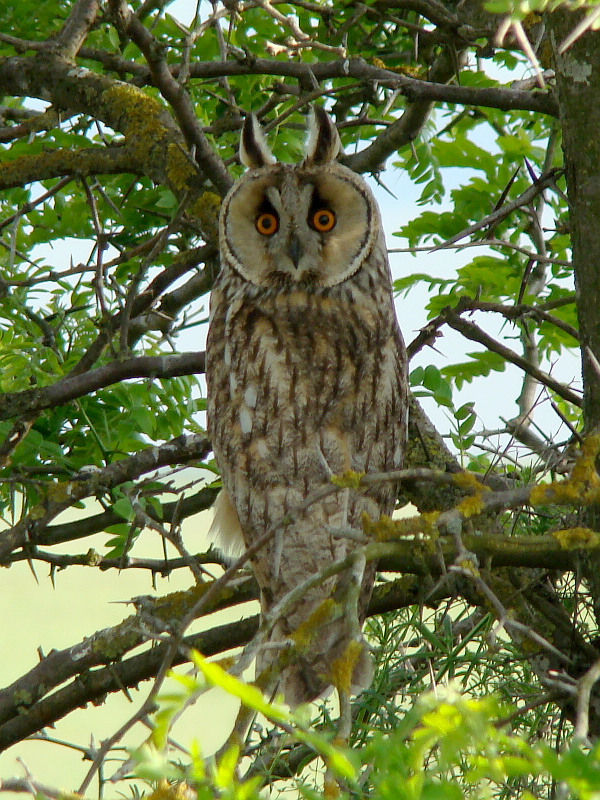
The Long-eared Owl (Asio otus) is one of the most common and widespread species of owls in Ukraine. However, by the moment there had no works generalizing the data on its numbers and distribution in the country during the winter period. It is exactly the issue this post is dedicated to.

To analyze the number and distribution of the Long-eared Owls in Ukraine there have been used literary sources*, personal observations of authors and communications of other ornithologists. The data mainly for the years 2000-2009 were analyzed. However, for particular territories also observations of the previous decade were used. The list of identified wintering sites of the Long-eared Owls can be found in the attached file [in Russian].

As it is known, the Long-eared Owls typically form concentrations in winter on day roosting sites, numbering dozens and even hundreds of birds (Priklonsky, Ivanchev 1993). However, the adaptive significance of this phenomenon is not completely revealed (Pukinsky, 1977).

The wintering sites of the Long-eared Owls in Ukraine cover practically the whole territory, except for mountainous regions of the Carpathians and Crimea. In the Carpathians, wintering grounds of this species were rarely observed at low altitudes, where the birds had penetrated along the wide river valleys. In particular, in the winter of 1989 the bird concentration was observed in Yaremcha City (ca. 650 m above sea level). The exteme points of wintering sites, where the birds approach to the foothills of the Crimea, are the village of Urozhayne (Simferopol district), the village of Zuya (Bilohorsk district) (V.N. Kucherenko, pers.comm.). Read the rest of this entry »

Migratory concentrations of the White-tailed Eagle near Kremenchuhske Reservoir

December 12th, 2009 Posted in Field researches, Migrations, Photos, Video | 1 Comment »

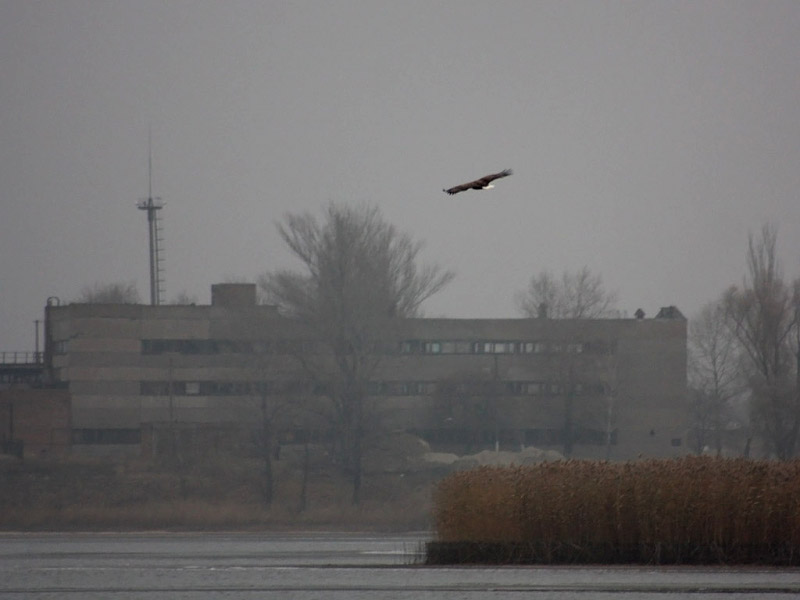
In recent decades the number of White-tailed Eagle (Haliaeetus albicilla) has increased across the European range. To provide effective protection of the species there is a need to understand the biology and characteristics of distribution in all seasons. That is why in the process of study and monitoring of the White-tailed Eagle in the Middle Dnieper we paid attention to the sites of autumn concentrations of these birds.

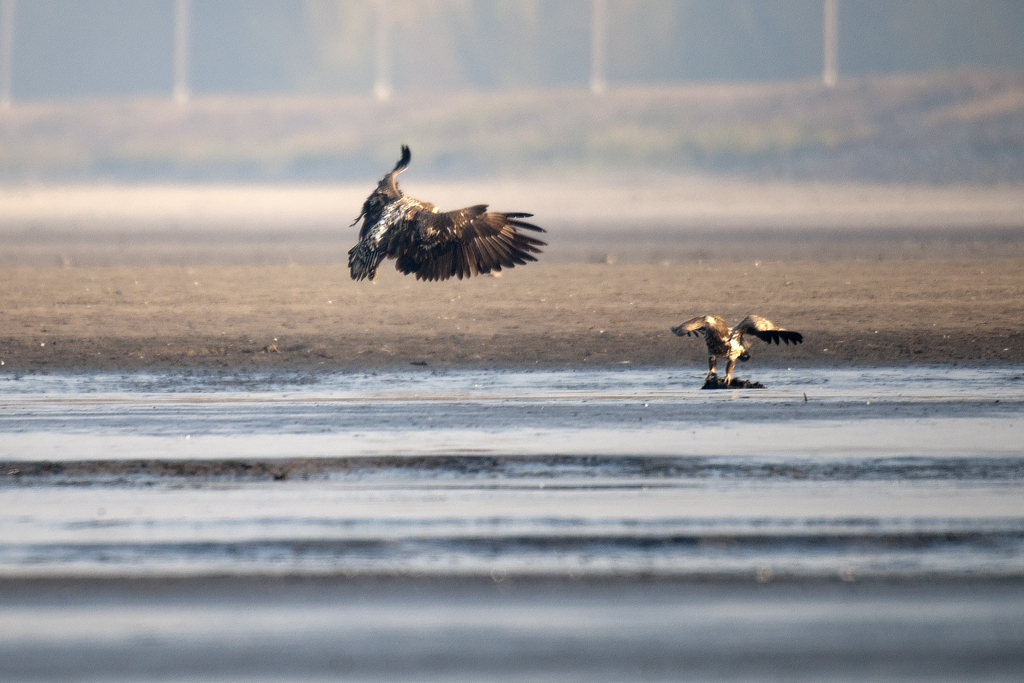
White-tailed Eagles’ air playing (by the author)

This communication presents the results of research for the autumn 2009. To study distribution of the White-tailed Eagle we surveyed the sites, potentially attractive for feeding: shallows of Kremenchuhske Reservoir and surrounding fishponds. The total length of the automobile route was approx. 1000 km. The counts were also participated by N.Borisenko and A. Ilyuha.

photo: M. Gavrilyuk, S. Domashevsky

In autumn White-tailed Eagles distribute unevenly in the Middle Dnieper. Adult birds in most cases remain in areas of breeding sites; frequently young birds stay with them. However, majority of immature birds concentrate in the area where feed reserves are more abundant. These are such areas as fishponds as well as shallows of reservoirs, where waterfowl concentrate. The results of counts of 2009 surpassed the number of birds observed in previous years and all of our wildest expectations.

Read the rest of this entry »

Migrations of birds of prey in Ukraine: what do we know about them?

November 25th, 2009 Posted in Migrations, Reviews | No Comments »

Seasonal migrations are an important stage in the annual life cycle of birds. They are characteristic for most species of Ukrainian birds of prey. However by the present time migratory routes and sites of mass concentrations are still poor known. Except for scientific importance this knowledge is essential for planning and organization of conservation of birds of prey. Also, sites of mass migration are of obvious interest for all birdwatchers.

Nowadays, the majority of migrants in Ukraine is considered to pass the country by a wide front, though with the reservation accepted that migrations pass not evenly everywhere but mainly follow “ecological routes”, or, at least, ecologically favorable places (Sevastyanov 1992). Therefore migration of birds of prey can be observed over all the territory of Ukraine. However its intensity differs in different regions and separate places.
There are several reasons of it. Birds with specific trophism (the Osprey, White-tailed Eagle) have to keep usual habitats, and for them migratory “corridors” are expressed more distinctly. Thus, the White-tailed Eagle and Osprey in Ukraine can be much more often met along the Dnieper and other large rivers. However even for these species a part of individuals flies during migration time over all the territory of Ukraine.
Intensity of migration of birds of preyThe more eurytropic are migrants in terms of their trophism, the more similar to the continuous is their migration front. Thus, the majority of birds of prey pass the country in a broad front. The narrowing of their front of migration is caused by landscape or weather and climate barriers.

To analyze the intensity of migration of birds of prey in the territory of Ukraine we have used the data on the maximum number of the individuals met for one day at one observation point during autumn migration (picture).
Despite small quantity of the data, results confirm that the migration goes by a broad front. Essential influence on the migration intensity is caused everywhere by weather conditions. In peak days of passage the number of migrants can increase in dozens times.

Read the rest of this entry »

Current status of the Peregrine Falcon population in Ukraine

November 11th, 2009 Posted in BP & pigeon-breeders, New publications | 1 Comment »

Peregrine Falcon in the Crimea

The Peregrine Falcon (Falco peregrinus) is included in the Red Data Book of Ukraine (1994) as a vulnerable species, and has the status of ‘Least Concern’ in the Red List of IUCN/Birdlife (2004). In the new edition of the Red Data Book (in print) it is referred as ‘rare’.

The second half of the 20th century was characterized with a catastrophic decrease of species numbers in all parts of the range especially in the Mediterranean area. As a result in 1980s the Peregrine population in Ukraine reached its minimum equaling to about 15-20 pairs. However already since 1980s the population showed a restoration trend in the Crimea. In the end of the 20th century and in the beginning of the 21st century the increase rate of numbers was rather high (as for such a rare species). This process attracted attention of ornithologists from Ukraine and recently three groups of specialists have published 3 papers, which we present below to download. All of them mutually complete each other and allow to receive quite a full image of the current status of the Peregrine Falcon in Ukraine. The numbers of breeding birds in the Crimea were estimated by V.N. Kucherenko and S.Yu.Kostin (2003) as 50-55 pairs, M.M.Beskaravainy and A.N.Tsvelykh (2009) – about 70 pairs, V.V.Vetrov, S.P.Prokopenko and Yu.V.Milobog (2009) about 105–110 pairs and additive 10-15 pairs in the Carpathians.

Read the rest of this entry »

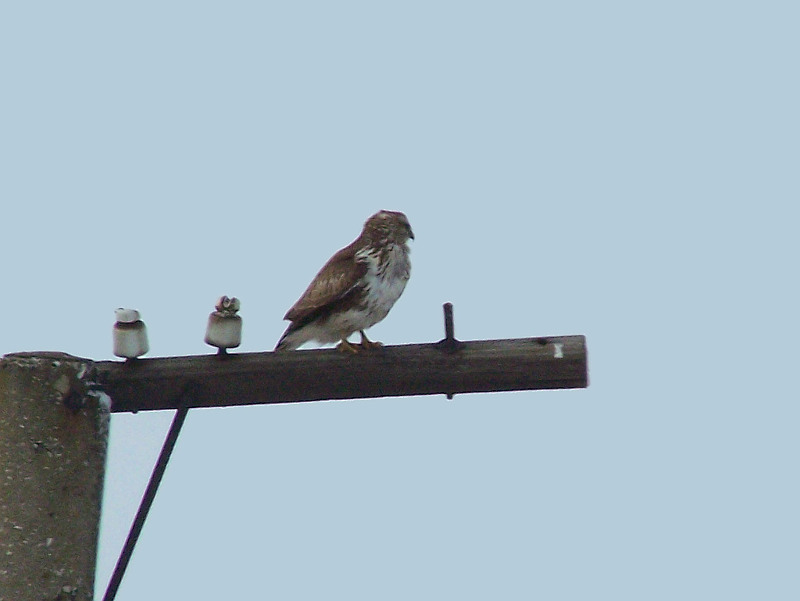
Monitoring of Long-legged Buzzard in Mykolaiv Region in 2009

November 5th, 2009 Posted in Field researches, Monitoring, Photos | No Comments »

We have been carried out the monitoring of Long-legged Buzzard in Mykolaiv area since 2000.

In 2009 8 of 10 traced cases of breeding were successful (one breeding case was informed by Pavlo Panchenko). Reasons of unsuccessful breeding attempts were the following: in one case birds abandoned the nests, probably because of disturbance (the vicinity of Ochakov City); in another case the old nest, existed for many years, turned out to be strongly inclined, and under the tree we discovered a fallen chick in the second downy plumage. We place the chick back to the repaired nest but its further fortune is unknown.

As a part of nests were examined from ground we didn’t always manage to identify the exact number of chicks. In general, the breeding success of the species was average – 2.1 chicks per a successfully breeding pair. One nest contained 4 fledglings, other – 3, all the rest had 1-2 fledglings. One of the nests had 2 chicks and 2 addled eggs. The highest number of chicks had the pair nested near the colony of the spotted sousliks.

According to data of previous years (since 2000), averagely 2.2 fledglings left nests, at this 80% of traced breeding attempts were successful.

Konstantin Redinov, Regional Landscape Park ‘Kinburnska Spit’

Some research data on Birds of Prey in Mykolaiv Region

November 5th, 2009 Posted in Fauna, Field researches, Photos | No Comments »

SOME RESEARCH DATA ON BIRDS OF PREY FOR THE BREEDING SEASON OF 2009 IN MYKOLAIV REGION, UKRAINE.

Several expeditions of 2009 (April-June) collected some new data on birds of prey in Mykolaiv region. The study area was investigated from the automobile ‘Zhiguli’ and also bicycle. Among the species listed in the Red Data Book of Ukraine (RDBU) we observed Long-legged Buzzard, Booted Eagle, Saker Falcon, Black Kite and Scops Owl (last two species were included in the new edition of RDBU).

Natural reserve ‘Yelanetsky Steppe’. Noticeable changes in the bird fauna of this area were not recorded. Since 2000 there have been known breeding of 3-4 pairs of Long-legged Buzzard (Redinov 2006). In 2009 nests of two pairs were still present in their old breeding sites. The third pair wasn’t found though had bred in 2008. Its nest in 2009 was occupied by a pair of the Goshawks. Two nests of Common Buzzard were discovered. Common Kestrel was not found, although earlier it had bred in small numbers. Numbers of Scops obviously decreased, partly because of deficit of available breeding areas.
In a breeding site of Black Kite, discovered in the vicinity of the reserve in 2000, a pair still bred in 2009.

Read the rest of this entry »