Collaborative ornithological researches in the Caucasus

June 14th, 2009 Posted in Field researches, Photos | No Comments »
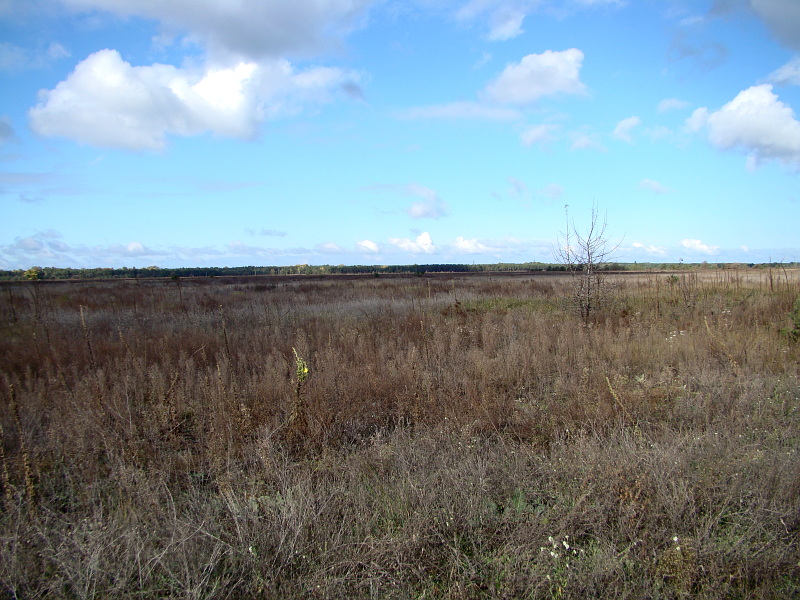
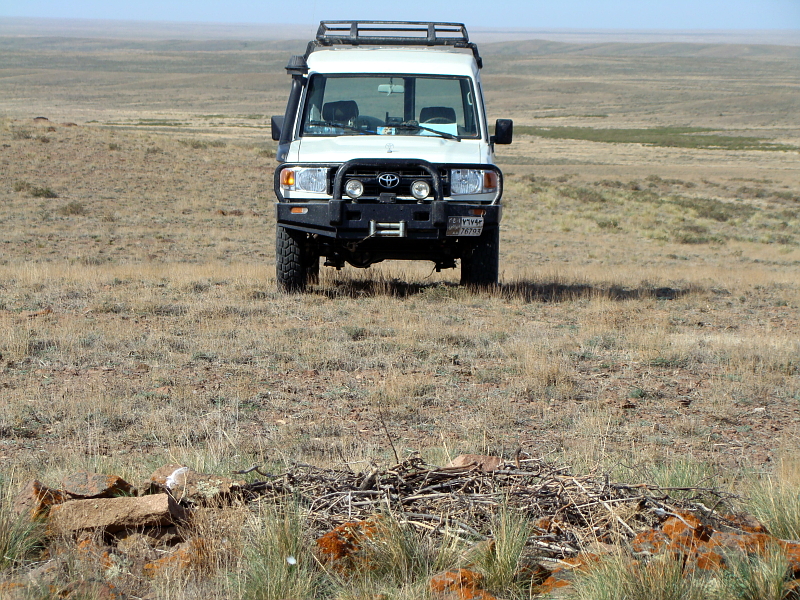
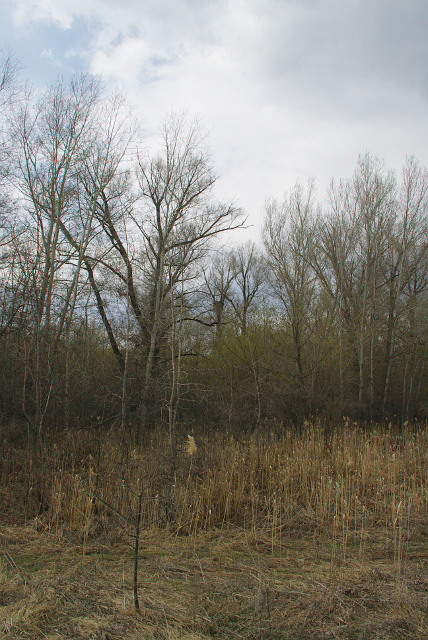
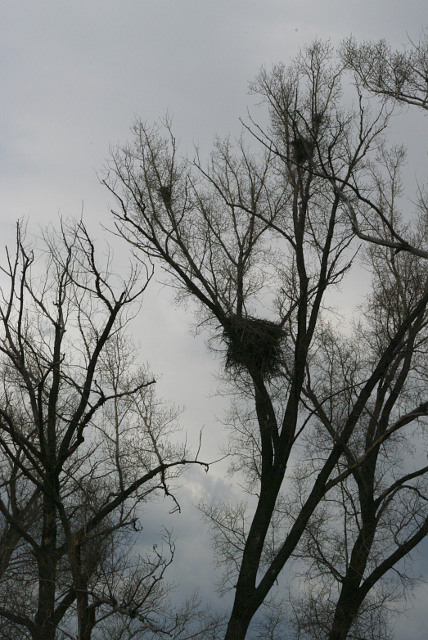
In early May 2009 the third Russian-Ukrainian expedition across the Northern Caucasus took place. The first expedition of this kind was in late May-early June 2004 along the Eastern Azov area and Taman. The second expedition in early May 2008 covered the Eastern Azov area and the Western Caucasus till Elbrus area, also Stavropolje and Kalmykia were investigated on the way. The last, most prolonged and effective route, from 1 to 10 May went across six regions of Russia: Rostov region, Kalmykia, Stavropol Territory (Stavropolje), plains and mountains of Daghestan, Kabardino-Balkaria and Karachai-Cherkesia. The total length of this over Russia rally comprised about 3,300 km.

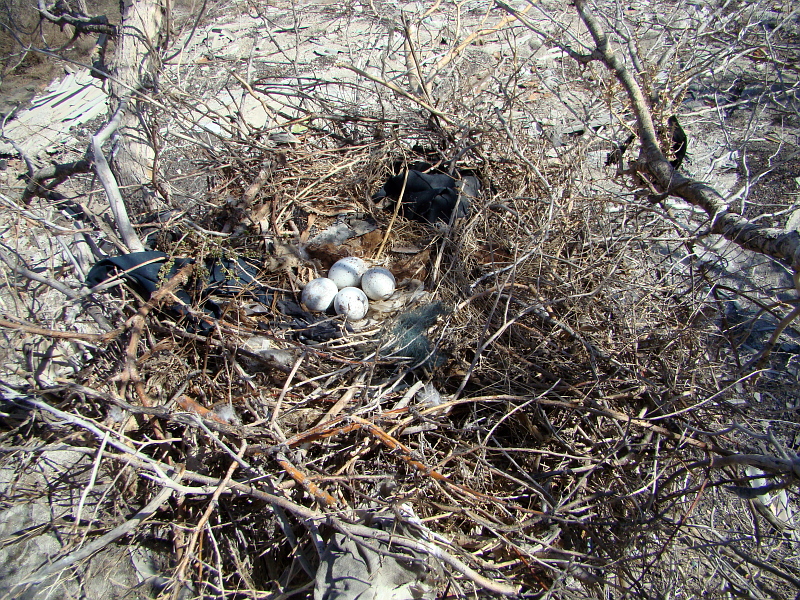
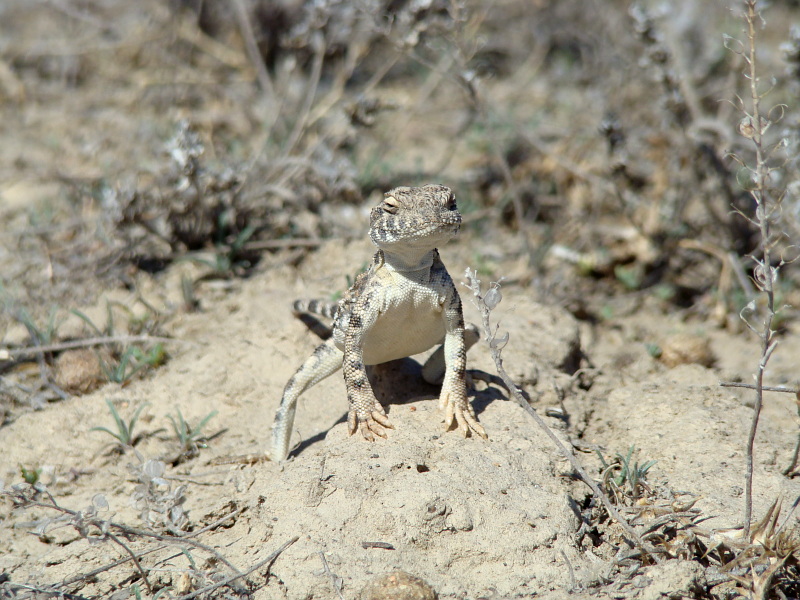
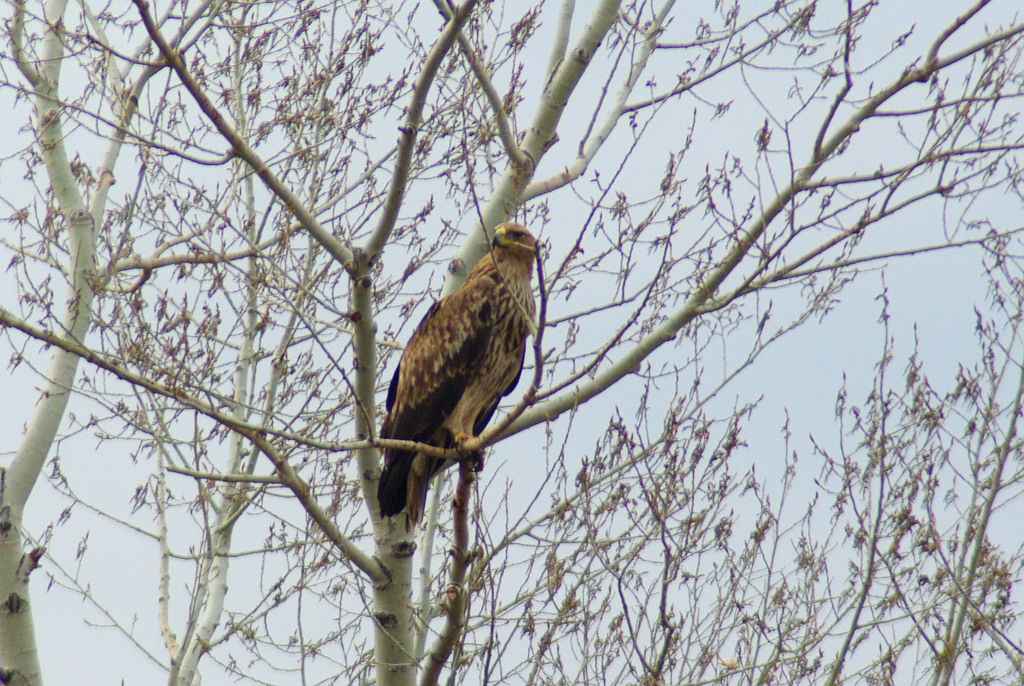
The expeditions were mainly aimed at searching for birds of prey and counting their numbers, especially rare, strictly protected ones: eagles, griffons, the Lammergeier, Egyptian Vulture, Long-legged Buzzard, Lesser Kestrel, etc. At the same time we studied their ecology, phenology of breeding, behaviour and the limiting factors, which determine dynamics of their ranges and populations. Also we gathered faunistic materials, counted small species of birds at our camping sites, searched for nests and carry out other investigation.

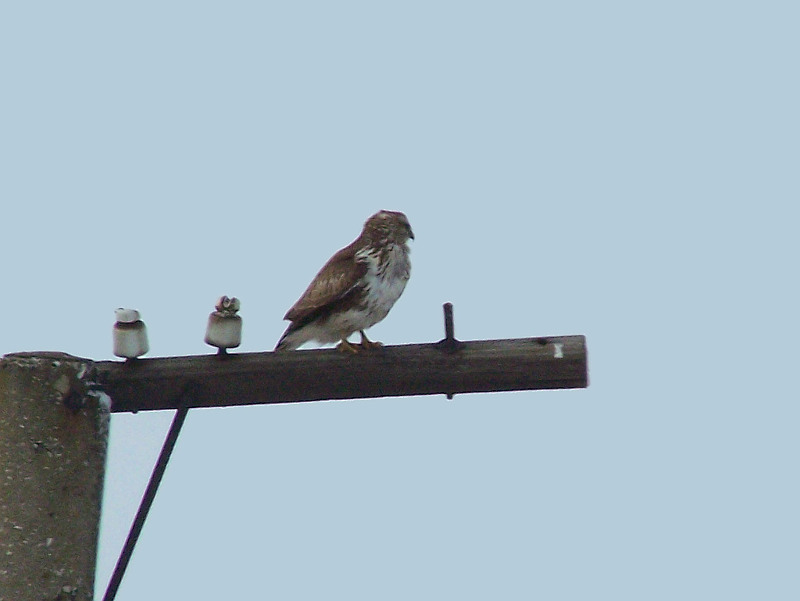
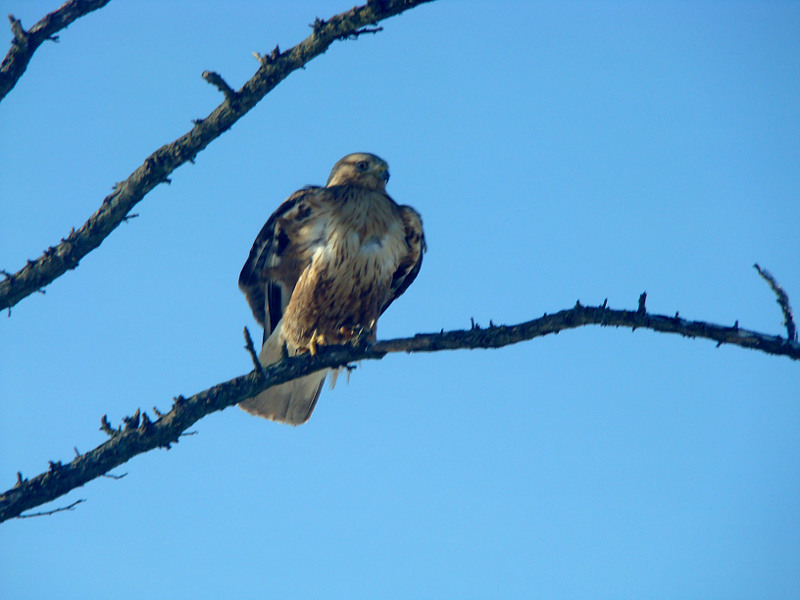
Materials of first two expeditions have been reflected in seven collaborative publications (Belik et al. 2004-2008) and in a number of other works. Very interesting results were received during the last travel as well. Thus, in Kalmykia and surrounded areas there was traced a pattern of current distribution of the Steppe Eagle and Long-legged Buzzard. The Steppe Eagle almost disappeared during last years, only preserved in small refuges with colonies of the little souslik, while the Long-legged Buzzard gradually increases its numbers and distributes to the west, mastering substituting food and new habitats, namely the poles of power lines where Steppe Eagles once nested, forest belts in fields, solitary trees and bushes in sand areas. During last years a separate population has been formed in mountains of Daghestan with birds began nesting on rocks (Bukreev et al., 2007). Now the Long-legged Buzzard there intensively penetrates in the depth of dry mountain villages and its breeding sites we have already found near the auls of Paraul, Arkas, etc. (aul- local name of the village in the Caucasus).

Read the rest of this entry »

New Data on the Long-legged Buzzard in Kyiv region

May 17th, 2009 Posted in Field researches, Photos | No Comments »

The Long-legged Buzzard is the species listed in the Red Data Book in Ukraine. During last decades its range expanded. Breeding sites were revealed in Kyiv region as well (Grishchenko 2002, 2003; Domashevsky, Kostyushin, Pismenny 2008). However, today we are still poor-known of a complete picture of distribution and numbers of the species. In addition, characteristics of the species ecology near the northern border of its range are also a question of interest.

During 1-3 May, 2009 for further study of distribution and ecology of the Long-legged Buzzard we examined in the field trip the southern part of Kyiv region (the right bank of the Dnieper). Our studies covered Mironovka, Tarashcha, Boguslav and Rakitnoye districts. Main attention was paid to systems of gullies as they are most promising for breeding of this species. We were focused at searching territorial Long-legged Buzzards and their nests. The distance of 435 km was covered by car. Except for gullies, edges of forest sites and small areas of the Ros’ River floodplain were visited. In spite of unfavourable prognosis, the weather was in general fine for researches as it rained only twice during the period.

In total, we have found 5 pairs of the Long-legged Buzzard not known before, three of them with occupied nests. Read the rest of this entry »

Materials of ІІІ International Scientific Conference «Birds of prey of Ukraine» have been published

May 17th, 2009 Posted in New publications, Workshops.Conferences | No Comments »

Modern Study of Birds of Prey and Owls. Materials of ІІІ International Scientific Conference «Birds of prey and Owls of Ukraine»

Modern Study of Birds of Prey and Owls. Materials of ІІІ International Scientific Conference «Birds of prey and Owls of Ukraine», Kryvyi Rih, 24–25 October 2008 / Gavrilyuk M.N., Fesenko H.V. (eds.). – Kryvyi Rih, 2008. – 412 p.

The book includes reports and posters submitted on scientific conference held in Kryvyi Rih on October 2008 and contains data of last study in broad range of questions of ecology, protection and use of birds of prey and owls distributed mainly in Eastern Europe. Materials of the book can be interested by professional ornithologists, environmental workers and amateurs in pedigreed pigeons breeding and falconry.

If you are not an author of one of articles included in the book, it costs for you 25 UAH. The book can be bought in Schmalhausen Institute of Zoology, National Academy of Sciences of Ukraine, Bogdan Hmelnitsky str, 15 – to apply to Hennadiy Fesenko.

If you want to receive the book by post, contact please Yurij Milobog ym@raptors.org.ua. For additional information just send a message to info@raptors.org.ua.

Contents: Read the rest of this entry »

Gavrilyuk, M.N. Practical guides for the monitoring program of birds of prey in Ukraine (2009).

May 17th, 2009 Posted in New publications | No Comments »

Open file


Gavrilyuk, M.N. Practical guides for the monitoring program of birds of prey in Ukraine (2009). − Cherkasy, 2009. − 20 p.

[in Ukrainian] File size 1.3 МB, – pdf.

The book is a component of the UBPRC initiative to provide regular monitoring for diurnal birds of prey and owls in Ukraine. It includes issues of organization and implementation of the monitoring program. Published in Ukrainian.

Specialist Meeting on the Conservation of the Saker Falcon

May 2nd, 2009 Posted in Workshops.Conferences | No Comments »

5-7 April, 2009 in Abu Dhabi, the capital of the United Arab Emirates, was held the meeting to discuss the status and conservation of the Saker Falcon.

The meeting was hosted by the Environment Agency – Abu Dhabi, EAD and International Wildlife Consultants Ltd., IWC (Great Britain).

The agenda included three main sections of issues. The first section reviewed current knowledge of the Saker range and numbers. The second considered problems of CITES, and the third raised problems of captive breeding of the bird in countries of Europe and GCC (the Gulf Cooperation Council).

Reports from all Saker Range Countries were presented. From Ukraine reported Vitaly Vetrov and Yury Milobog, members of the Ukrainian Birds of Prey Research Centre. Their presentation told about distribution and numbers of this raptor in Ukraine and Moldova. Basing on results of researches from other European countries it has been concluded that Ukraine holds the biggest population of the Saker in European part of the range. Nowadays the species numbers in Ukraine are estimated up to 270-310 breeding pairs. Majority of the population concentrates in the steppe zone and nests on poles of power lines.

Among reports of other participants we would like to pay attention to the following ones.
Read the rest of this entry »

Migration of raptors in the vicinity of Kyiv in autumn 2008

April 12th, 2009 Posted in Field researches, Migrations, Photos | No Comments »

Weather conditions of autumn 2008 have caused mass and intensity passage of Falconiformes, which allows us to treat this migration season as unusual.

We carried out observations on a permanent plot near the village of Pogreby (Brovary district of Kyiv region) located in the floodplain of Desna River (Domashevsky, 2003). Compared with previous counts an observation point was moved 4 km closer to the mouth of Desna River, which connects with the Dnieper floodplain (earlier, observations in this area were of rare periodicity). Thus, we have tried to cover as comprehensively as possible the coalescence of two migratory streams of the birds, which migrated across these rivers floodplains. Downstream the Desna mouth the floodplains merge into one floodplain of the Dnieper (see the map).

The observation point (OP) was located in the area, well-visited with people, especially at weekends. The suburb of Kyiv, bordered with high-rise new buildings, stretched 2.5 km toward the south-east of OP, cottage buildings were even closer. Territory near OP was of open type (abandoned agricultural lands, haymakings and pastures) with small islets of forests, forest belts and solitary trees. In depressions there were small lakelets.

Read the rest of this entry »

Observations of marked birds

March 31st, 2009 Posted in Migrations | No Comments »

There came a period of bird spring migration, and again we’re searching the sky for silhouettes of our favourites. Quite often we don’t guess that our observations might give an unexpected result. During last decades an individual marking of birds of prey by using colour rings, wing tags or ‘windows’ on wings is rather common-spread. These are the elements which should be paid attention when observing birds, also during migrations. A camera may be very useful as modern technical devices give a possibility to take a picture of a bird, and then have a better look at necessary features. Therefore we can advise not only gaze at flying birds, but take a picture.

First three photo are taken from the paper: Dravecký M, Sellis U, Bergmanis U, Dombrovski V, Lontkowski J, Maciorowski G, Maderič B, Meyburg B-U, Mizera T, Stój M, Treinys R & Wójciak J 2008: Colour ringing of the Spotted Eagles (Aquila pomarina, Aquila clanga and their hybrids) in Europe – a review. Slovak Rapt J 2: 37–52.

The colour marking of birds in Ukraine was not provided yet, but basing on migratory routes, you can meet the raptors marked in other countries, as follows:

Read the rest of this entry »

The third cycle of counts of BP in the alienated zone of CAPS

March 9th, 2009 Posted in Field researches, Photos | No Comments »
THE FINAL STAGE OF WINTER COUNTS OF LARGE BIRDS OF PREY IN THE ALIENATED ZONE OF THE CHORNOBYL ATOMIC POWER STATION IN THE WINTER 2008-2009

The third cycle of counts of large birds of prey during winter 2008-2009 was carried out 17-20.02.2009. Snowfalls, started on the threshold of counts, have returned leaving winter. The ground was covered with fresh snow, but on the rivers Pripyat and Uzh big ice-holes were formed. Therefore, the wintering birds were dispersed. The renewed frosts equaled to – 6 °C at night, in the afternoon the temperature kept within 0… +1°C.

On February, 17th we surveyed the left bank of the Pripyat going along the route of the last census. On ponds of river Nesvich, where in January White-tailed Eagles had concentrated, only 3 juveniles were noticed. The ice-hole at the sluice strongly increased, and we did not observe any signs of fish suffocation in this season. One young White-tailed Eagle was met at the village of Staroselye. Further we surveyed the left bank of Pripyat upstream till the Belarus border (Mosany village). There we did not register any White-tailed Eagle. Survey of areas of the Kyiv Reservoir at villages of Ladyzhichi and Teremtsy also did not brought desirable results. Carrying out of counts was negatively affected by snow going during the daylight, so visibility sometimes worsened to 800 m.
On February, 18th because of abundant snowfalls which did not allow to carry out high-grade researches, we were forced to refuse visits for counts.
On February, 19th it was wonderful windless and sunny weather. We surveyed areas of an upper reaches of the Kyiv Reservoir from Domantov Island. So we moved ahead to the Pripyat mouth and finished a route near the mouth of Uzh River. That day 7 young White-tailed Eagles were counted. At the nest of White-tailed Eagles, found in December near the village of Otashev, we did not see any signs of presence of adult birds. It was still under a snow layer. It was unknown why birds did not start repairing the nest. They probably abandoned it or would appear at the nest later.
On February, 20th we spent a part of day at the Uzh mouth. There were some meetings of young birds, number of the counted birds equaled to 2-3 individuals.

Read the rest of this entry »

Experience of Foundation of Raptor Conservation Centre

February 23rd, 2009 Posted in BP rehabilitation | No Comments »
WILD ANIMALS REHABILITATION AND REINTRODUCTION CENTRE OF GALYCH NATIONAL NATURAL PARK

In one of our previous publications we have raised the problem of absence of any raptor rehabilitation centre in Ukraine. It is pleasant to notice that on regional level there are attempts of solving this problem.

In the region of Ukrainian Carpathians there isn’t any specialized agency for rehabilitation of wild animals which suffered or temporarily lost abilities to survive in nature. Institutions for reintroduction of rare species don’t exist either. So, suffered animals are usually killed and stuffed or, as a better variant, given to zoos or traveling menageries, where kept till their death.
In August 2007, according to an initiative of staff-workers of the Scientific Department of Galych National Natural Park (Ivano-Frankivsk region, Galych City – www.halychpark.if.ua) the first animal was taken for rehabilitation and further release to nature. In 2008, an idea was born to establish the West Ukrainian Wild Animals Rehabilitation and Reintroduction Centre (hereinafter the Centre) on basis of the Park. The Park administration gave less than 3,000 hrivnas to construct open-air cages, buy food and a freezer.

Read the rest of this entry »

The second cycle of counts of BP in the alienated zone of CAPS

February 15th, 2009 Posted in Field researches, Photos | No Comments »
CONTINUATION OF WINTER COUNTS OF LARGE BIRDS OF PREY IN THE ALIENATED ZONE OF CHORNOBYL ATOMIC POWER STATION (CAPS)

The second cycle of counts of birds of prey in the alienated zone of Chornobyl Atomic Power Station (CAPS) was carried out from 20 to 22.01.2009. The length of automobile counts was about 380 km within the zone.

Snow cover was 15-40 cm thick. In the first day of works, 20th January, the weather was windless and sunny. A plot in the Pripyat-Dnieper interfluve was chosen for a visit, recommended by S.P. Gashchak (Chornobyl Centre on Problems of Nuclear Safety, Radioactive Waste and Radioecology). Unfortunately, during our last visit into CAPS zone this region had remained unsearched because of difficulties arisen with a permission to get there. That was a reason of underestimation of birds. Having gone by car along the Pripyat upstream, we turned to the north-west. On open areas we recorded 3 White-tailed Eagles. A concentration of White-tailed Eagles was revealed near the village of Gorodchan in Chornobyl district on ice-covered ponds of the Nesvich River, which separates borders of Ukraine and Byelorus (Braginsky district of Gomel region). Birds sat there on ice and trees. Several White-tailed Eagles were recorded also in the village of Chapaevka. In a total, 16 birds were registered there. One of the reasons of the bird concentration was two small unfrozen patches of water near closed sluices. On ice and walkways there were many tracks of birds. Some blood spots of the fish eaten by predators were discovered. In water, there were well seen backs of several fish species, gathered near the source of oxygen. On our way back, we observed 2 other individuals of White-tailed Eagles, and another bird was registered in the Pripyat floodplain. Overall, 22 White-tailed Eagles were counted during the day, 6 of them in adult plumage.

Read the rest of this entry »